A weekend without rushing
The fastest way to ruin a coastal trip is to drive four hundred miles in a single weekend chasing changing wind forecasts across six different beaches. When you anchor yourself in one walkable town and let the six-hour lunar tide cycle dictate your day, even a small two-foot swell feels restorative.
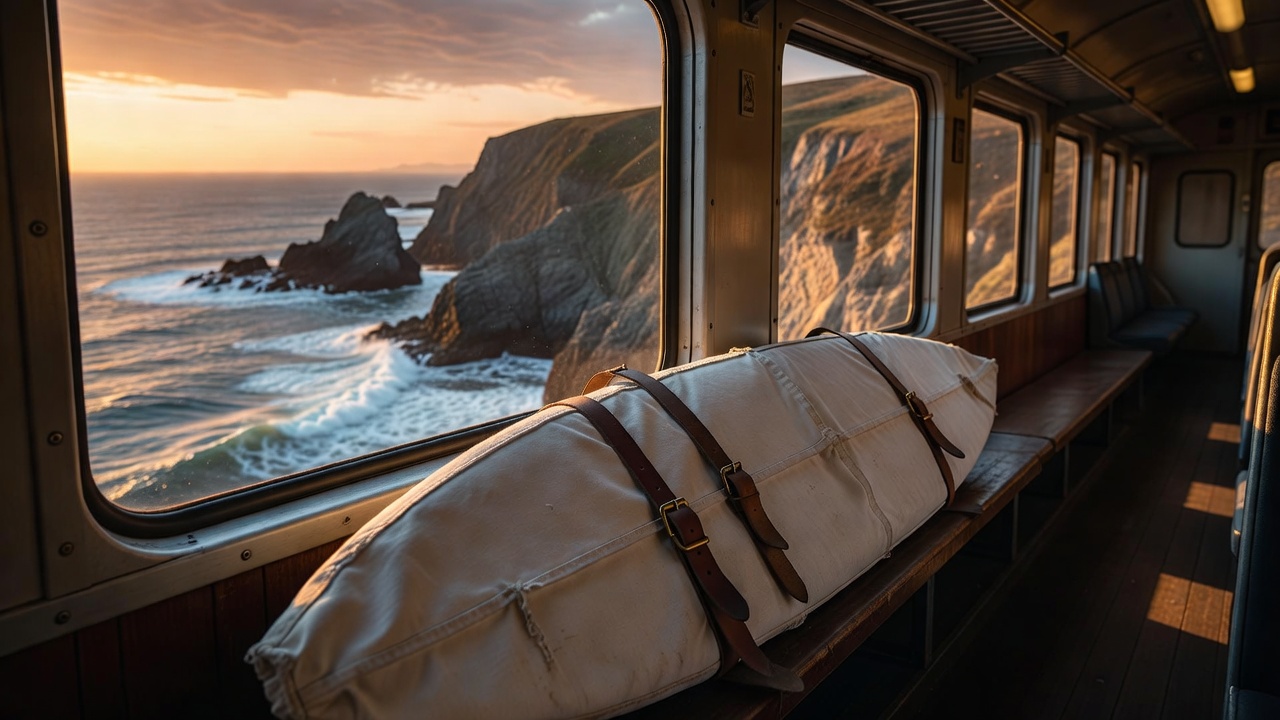
Structuring a 72-hour stay around the tide clock
Unlike inland holidays organized around nine-to-five museum hours, a well-paced surf weekend follows the semi-diurnal tide—two highs and two lows every twenty-four hours and fifty minutes. Instead of packing an itinerary with errands, divide each day into three natural chapters:
- The Dawn Window (First Light to +3 Hours): Coastal land cools overnight, creating gentle offshore land breezes before solar heating pulls sea breezes onshore by mid-morning. Even if you only swim, bodysurf, or walk the tide line, being on the sand at daybreak gives you the quietest water of the day.
- The Midday Slack (High-Water or Wind-Onshore Hours): When the tide either swamps the reef or drops too dry over the boulders, step back into town. Visit the municipal fish market, read in a sheltered courtyard, walk a coastal footpath to the next headland, or visit a maritime museum.
- The Glass-Off (Final 90 Minutes Before Dusk): As afternoon thermal winds subside, the ocean surface often relaxes into dark, oily ribs of swell. Follow a short evening session with an unhurried dinner at a neighbourhood tavern.
Three classic rail-to-reef weekend routes
Leaving the car behind eliminates the sharpest source of friction in small surf villages: headland parking congestion. These three corridors connect major rail hubs directly to walkable surf parishes and independent board shapers:
- Paddington to St Ives & Newquay (Cornwall, UK): Board the Great Western Railway Night Riviera sleeper or daytime express to St Erth, then step across the platform onto the four-coach branch line that winds along the Hayle Estuary directly to Porthmeor Beach.
- Bordeaux / Bayonne to Guéthary & Hendaye (Côte Basque, France): TER Nouvelle-Aquitaine regional trains stop at Biarritz, Guéthary, Saint-Jean-de-Luz–Ciboure, and Les Deux Jumeaux (Hendaye). From Guéthary halt, you are ninety seconds on foot from the harbour slipway.
- Los Angeles Union Station to San Clemente & Encinitas (California, USA): The Amtrak Pacific Surfliner and NCTD Coaster run directly along the beach bluffs. At San Clemente Pier or Encinitas station, you step off the train car less than three hundred metres from the high-tide line.
Low-impact coastal stewardship: four rules that matter
Coastal ecosystems sit on a knife-edge between marine erosion and terrestrial runoff. Visitors who care about the longevity of surf towns practise four concrete habits:
1. Never cut across foredunes: Marram grass (Ammophila arenaria) and sea holly trap windblown sand with delicate root networks that hold back winter storm surges. Walking off timber boardwalks crushes root crowns and creates wind-tunnel blowouts within a single season.
2. Rent from resident quivers when flying: Airline baggage holds crack surfboard rails at an alarming rate, and hauling oversized board coffins requires large rental vans at your destination. Many independent surf shops in Ericeira, Raglan, and Biarritz maintain curated "quiver libraries" of hand-shaped local twin-fins, mid-lengths, and noseriders tailored to their exact breaks.
3. Choose plant-based wax and reef-safe zinc: Standard paraffin surf wax is a petroleum byproduct that flakes off in the impact zone. Switch to beeswax and pine-resin blends formulated for your water temperature, and wear UPF rash vests or non-nano zinc oxide mud instead of chemical aerosol sunscreens.
4. Respect residential acoustic hours: In compact stone villages where houses sit directly on the pavement, voices echo sharply at 06:00. Load boards quietly, avoid slamming van doors at dawn, and rinse gear at public beach showers rather than running guesthouse taps full blast.
Seasonal Packing & Neoprene Reference
| Water Temperature | Recommended Wetsuit Thickness | Wax Compound | Off-Water Layering |
|---|---|---|---|
| 8°C – 11°C (Winter UK / North Atlantic) | 5/4mm hooded fullsuit + 5mm boots & 3mm mitts | Cold (below 14°C) | Heavy boiled-wool jumper, windproof oilskin & thermos flask |
| 12°C – 15°C (Spring/Autumn Europe, NorCal) | 4/3mm chest-zip fullsuit + 3mm split-toe boots | Cool (14°C – 18°C) | Cotton canvas chore coat, flannel overshirt & wool beanie |
| 16°C – 19°C (Summer Portugal, Autumn SoCal) | 3/2mm fullsuit or 2mm long-sleeve spring suit | Warm (18°C – 22°C) | Linen shirt, lightweight windbreaker for evening nortada |
| 20°C+ (Late Summer Basque Country / Tropics) | 1.5mm neoprene vest or boardshorts + rashguard | Tropical (above 22°C) | Wide-brimmed sun hat, mineral zinc & breathable cotton |
Have a specific coastal town question?
Read our compiled answers on tide charts, board transport, and local etiquette, or compose a beach note to our editorial desk.
Browse Coastal Queries